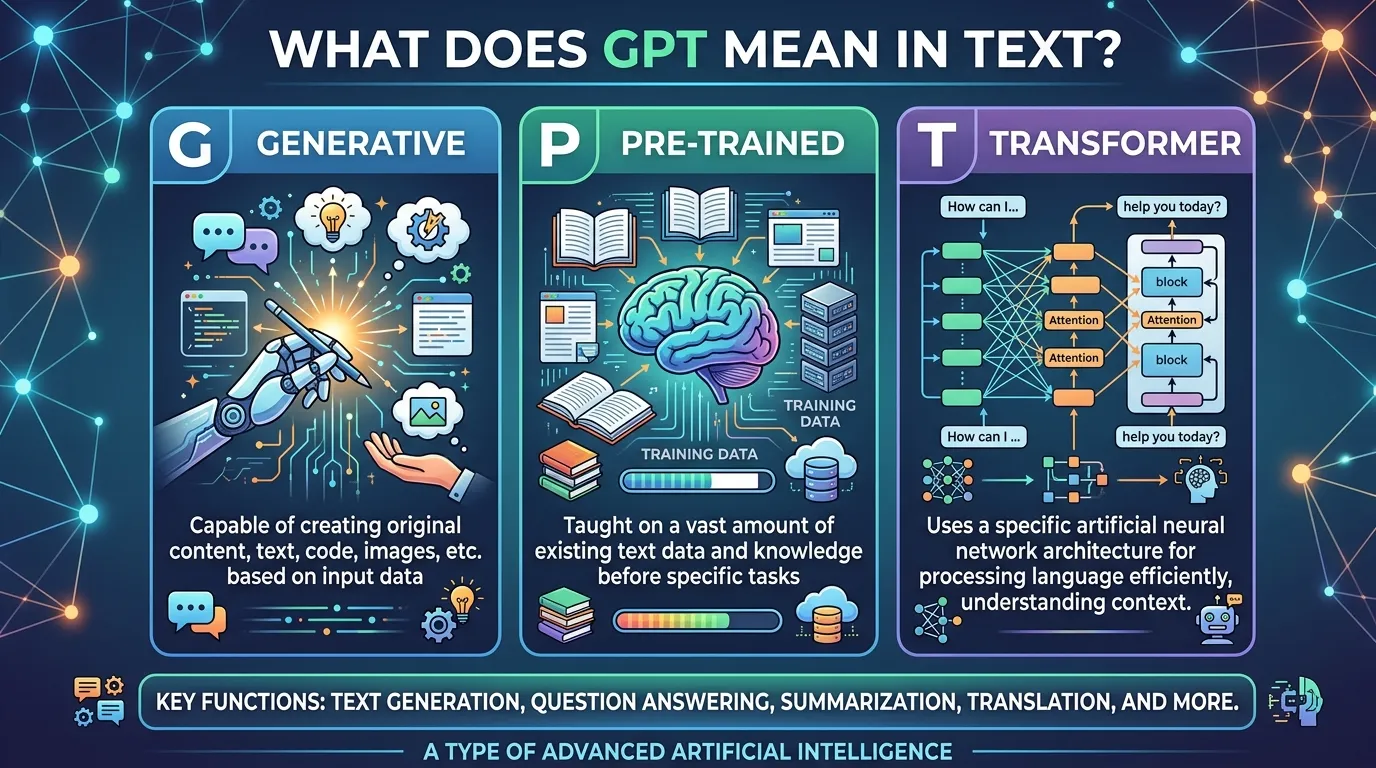
If someone mentioned GPT in a conversation and you weren’t sure what it meant, you are not alone. GPT stands for “Generative Pre-trained Transformer” a type of advanced artificial intelligence technology that can understand and generate human-like text. Most people today associate GPT directly with ChatGPT, the AI chatbot developed by OpenAI that took the world by storm.
Understanding what GPT means in text conversations and social media is important because this term now appears everywhere on Twitter/X, Reddit, TikTok, Instagram, and in everyday texting when people talk about AI tools, writing assistants, and chatbots.
People search for GPT because it sounds technical but is now a part of everyday digital conversation. Whether someone is talking about using GPT for homework help, content writing, or just chatting with an AI, knowing what it means keeps you fully in the loop.
This guide breaks down every meaning of GPT simply, clearly, and with real examples anyone can understand.
GPT Meaning in Text
In texting, GPT most commonly stands for Generative Pre-trained Transformer. It’s the name of a type of artificial intelligence language model designed to understand questions and generate human-like responses.
When someone mentions GPT in a conversation, they are usually talking about using an AI assistant to answer questions, write messages, summarize information, brainstorm ideas, or help with school and work.
For example:
- “I asked GPT to explain this homework.”
- “GPT helped me rewrite my email.”
- “That paragraph looks like GPT wrote it.”
In these examples, GPT isn’t describing a person. Instead, it’s referring to an AI system that can produce written content or answer questions.
Is GPT Slang, an Acronym, or an Abbreviation?
GPT is an acronym, not internet slang.
Each letter represents part of the technology behind the AI:
- G = Generative
- P = Pre-trained
- T = Transformer
Most people don’t use the full phrase in casual conversations because it’s long. Instead, they simply say GPT, and most internet users immediately understand they’re talking about AI.
Unlike slang terms such as LOL, BRB, or IDK, GPT is a technical acronym that has become popular in everyday language.
What Does GPT Mean in Everyday Chat?
In daily conversations, people often use GPT as a shortcut when talking about AI assistance.
For instance:
- “Can GPT help with this?”
- “I used GPT for ideas.”
- “GPT explained it better than Google.”
- “Ask GPT if you’re not sure.”
Notice that in these examples, GPT is treated almost like a helpful assistant. People often say “GPT” instead of mentioning a specific AI application because the acronym has become widely recognized.
Sometimes the word is also used humorously.
Someone might comment:
“This reply is definitely GPT.”
Here, they mean the message sounds polished, detailed, or AI-generated.
In other situations, people may say:
“Don’t copy GPT word for word.”
This is simply advice to use AI as a learning tool rather than copying its responses without editing.
Does GPT Always Mean Artificial Intelligence?
Most of the time, yes.
However, like many acronyms, GPT can have different meanings in specialized industries.
For example, in technology, computing, or engineering discussions, GPT may refer to:
- GUID Partition Table (a computer storage format)
- Other technical abbreviations used in specific fields
The good news is that context usually makes the meaning obvious.
If friends are chatting about homework, writing, social media, or AI, GPT almost certainly refers to artificial intelligence.
If someone is repairing a computer or discussing hard drives, GPT may mean something completely different.
Why Is GPT So Popular Now?
A few years ago, very few people used the word GPT outside the technology industry.
Today, things have changed.
Millions of students, professionals, content creators, business owners, and casual internet users rely on AI tools every day. As a result, GPT has become part of normal online vocabulary.
Instead of saying:
“I used an artificial intelligence language model.”
People simply say:
“I asked GPT.”
It’s shorter, easier, and instantly understood by many internet users.
The growing popularity of AI has also increased curiosity. Many people who see GPT mentioned online search for its meaning because they don’t want to miss what others are talking about.
Where People Use GPT
GPT appears across many online platforms, but the way people mention it can vary depending on where they’re chatting. Sometimes it’s used seriously, while other times it’s part of a joke or meme.
Let’s look at where you’re most likely to see the term.
GPT on TikTok
TikTok creators frequently mention GPT when sharing productivity tips, study hacks, writing advice, or AI tutorials.
You might see captions like:
- “GPT wrote this story.”
- “Testing GPT against my teacher.”
- “Can GPT solve this riddle?”
Many educational and tech creators also demonstrate how they use AI to brainstorm ideas, explain difficult topics, or improve writing.
In the comments, users often ask:
- “Did GPT really make this?”
- “What prompt did you use?”
- “Can GPT do that?”
As AI-related videos continue to trend, GPT has become a familiar term for many TikTok users.
GPT on Snapchat
Snapchat users sometimes mention GPT while chatting with friends or discussing AI-powered features.
Examples include:
- “I asked GPT what to say.”
- “GPT gave me a better caption.”
- “Try asking GPT.”
Because Snapchat conversations are usually quick and casual, GPT is often mentioned as a helpful tool rather than explained in detail.
GPT on Instagram
Instagram users commonly refer to GPT in captions, comments, and creator posts.
For example:
- “Made with GPT.”
- “GPT helped me organize these ideas.”
- “Here’s my GPT prompt.”
Some creators openly explain that AI helped with brainstorming, while others simply mention GPT when discussing content creation or productivity.
You’ll also find people debating whether certain captions or comments sound AI-generated.
GPT on WhatsApp
WhatsApp is one of the most common places where GPT appears in everyday conversations.
Friends, family members, classmates, and coworkers often recommend using GPT for different tasks.
Examples include:
- “Ask GPT.”
- “GPT explained it perfectly.”
- “Use GPT to summarize it.”
Because WhatsApp is used for both personal and professional chats, GPT may come up in discussions about school assignments, work projects, travel plans, recipes, or general questions.
GPT in SMS Text Messages
Even traditional text messages now include references to GPT.
Someone might text:
- “Can GPT help with this?”
- “I checked with GPT already.”
- “GPT gave me three ideas.”
Since texting is usually brief, people rarely write out the full meaning of the acronym. They simply type GPT, assuming the other person understands they’re talking about AI.
As artificial intelligence becomes more common, seeing GPT in regular SMS conversations is no longer unusual.
Although GPT originally started as a technical acronym, it has become a familiar part of everyday digital conversations. Whether you’re scrolling through TikTok, chatting on WhatsApp, or texting a friend, understanding what GPT means makes it much easier to follow modern online discussions.
Real Chat Examples
The easiest way to understand GPT is by seeing how people naturally use it in conversations. Below are 10 realistic texting examples that show different situations where the term appears.
Example 1: Homework Help
A: I’m completely stuck on this history assignment.
B: Have you tried asking GPT?
A: Not yet. I’ll see if it can explain it more simply.
Example 2: Writing an Email
A: I don’t know how to write this work email.
B: GPT can help you draft it.
A: Good idea. I’ll edit it before sending.
Example 3: Social Media Caption
A: I can’t think of an Instagram caption.
B: GPT usually gives some creative ideas.
A: I’ll give it a try.
Example 4: Studying for an Exam
A: This science chapter is confusing.
B: Ask GPT to explain it like you’re 12 years old.
A: That might actually help!
Example 5: Planning a Trip
A: We need a weekend travel plan.
B: GPT can create an itinerary in seconds.
A: That’ll save us so much time.
Example 6: Funny Conversation
A: That message sounds way too perfect.
B: Are you sure GPT didn’t write it?
A: Maybe I had a little help!
Example 7: Learning Something New
A: What’s the easiest way to learn coding?
B: I usually ask GPT whenever I’m confused.
A: I’ll start doing that too.
Example 8: Brainstorming Ideas
A: I need ideas for my presentation.
B: GPT is great for brainstorming.
A: Hopefully it gives me something unique.
Example 9: Book Recommendation
A: Can you recommend a mystery novel?
B: GPT gave me a great list yesterday.
A: I’ll check it out.
Example 10: Everyday Chat
A: Where did you find that information?
B: GPT explained it really well.
A: Nice, I’ll ask it next time.
How to Reply When Someone Says “GPT”
If someone mentions GPT in a conversation, your reply depends on the situation. Sometimes they’re asking for help, sometimes they’re joking, and other times they’re simply sharing where they found information.
Here are some natural ways to respond.
Funny Replies
These replies work when the conversation is lighthearted.
- “Did GPT deserve the credit too?”
- “Tell GPT I said thanks!”
- “Looks like AI is doing overtime.”
- “I guess GPT is everyone’s study buddy now.”
- “AI never sleeps, does it?”
These playful responses fit well with friends or social media conversations.
Casual Replies
For everyday texting, simple replies usually work best.
- “I’ll check GPT too.”
- “That’s a good idea.”
- “I never thought about asking GPT.”
- “Thanks for the suggestion.”
- “I’ll give it a try.”
Casual replies keep the conversation moving naturally.
Friendly Replies
If you’re chatting with classmates, coworkers, or family members, these responses sound warm and supportive.
- “Thanks! That really helps.”
- “I’ll see what GPT says.”
- “Good recommendation.”
- “I appreciate the tip.”
- “Hopefully it can explain it better.”
These replies acknowledge the suggestion without sounding overly formal.
Neutral Replies
Sometimes a simple response is all you need.
- “Okay.”
- “Noted.”
- “I’ll look into it.”
- “I’ll check.”
- “Thanks.”
Neutral replies work well in professional or school conversations.
Is GPT Rude or Offensive?
No. GPT is not considered rude or offensive.
It’s simply the name of an artificial intelligence technology, and most people use it in a neutral way.
For example:
“I asked GPT to summarize this article.”
This sentence doesn’t contain anything offensive. It’s simply explaining where the information came from.
Is It Safe to Use?
Yes.
Using the term GPT is perfectly safe in normal conversations.
You’ll see it in:
- Text messages
- Social media posts
- School discussions
- Workplace conversations
- Online forums
- Emails
Because it’s widely recognized, most people understand what you’re referring to.
Can GPT Ever Be Used Negatively?
Sometimes people use GPT jokingly.
For example:
“That sounds like GPT wrote it.”
Depending on the tone, this could simply be a joke or a playful comment suggesting that a message sounds polished or AI-generated.
In some cases, it may be used as light criticism if someone believes another person relied too heavily on AI instead of writing something themselves.
Even then, the word GPT itself isn’t offensive. The meaning depends entirely on the context and tone.
Is It Appropriate at School or Work?
Yes.
In fact, GPT is commonly discussed in schools, universities, and workplaces.
Teachers may talk about responsible AI use, while employers might encourage staff to use AI tools for brainstorming, drafting ideas, or improving productivity.
However, it’s important to follow any rules your school or workplace has regarding AI-assisted work.
Using GPT as a learning tool is generally acceptable, but submitting AI-generated work as your own without permission may not be.
Who Uses This Term?
A few years ago, only software developers and AI researchers regularly used the term GPT.
Today, it’s recognized by millions of people around the world.
Students
Students often mention GPT when studying, researching topics, solving homework problems, or practicing writing skills.
You’ll commonly hear comments like:
- “GPT explained it better.”
- “I used GPT to study.”
- “GPT helped me understand the lesson.”
Professionals
Office workers use GPT for many everyday tasks, including:
- Drafting emails
- Summarizing documents
- Brainstorming ideas
- Creating presentations
- Improving writing
Because of this, GPT has become a familiar word in many workplaces.
Content Creators
YouTubers, bloggers, TikTok creators, marketers, and freelancers frequently mention GPT when discussing productivity or content creation.
Many creators openly explain how AI helps them generate ideas, organize information, or overcome writer’s block.
Gen Z and Younger Internet Users
Gen Z has quickly adopted GPT into everyday online conversations.
Instead of saying:
“I used an AI tool.”
Many simply say:
“I asked GPT.”
It’s shorter, easier to type, and instantly understood by many people online.
Common Platforms
You’ll regularly see GPT mentioned on:
- TikTok
- Snapchat
- X (formerly Twitter)
- Discord
- YouTube comments
- SMS text messages
As AI becomes part of everyday life, the term continues to spread across nearly every major online platform.
How Often Does GPT Appear Online?
Compared to traditional texting abbreviations like LOL or BRB, GPT is still relatively new.
However, its popularity has grown rapidly over the past few years.
Millions of people now mention GPT every day when discussing:
- Homework
- AI tools
- Writing
- Business
- Programming
- Research
- Productivity
- Social media
Because artificial intelligence continues to evolve, GPT is likely to remain a common part of online conversations for years to come.
Origin of the Term
The acronym GPT originated in the field of artificial intelligence.
It stands for Generative Pre-trained Transformer, a name describing a type of AI language model designed to understand and generate text.
The term was first known mainly among AI researchers and software developers. Outside the technology world, very few people had heard of it.
That changed as AI tools became available to the public. Millions of people began using GPT-powered assistants for writing, studying, coding, brainstorming, and answering everyday questions.
As more creators shared videos, tutorials, and productivity tips online, the acronym spread rapidly across platforms like TikTok, YouTube, Reddit, and Instagram.
Today, many people use GPT without even knowing what each letter stands for. In everyday conversation, it has become shorthand for an AI assistant that can answer questions or help with writing and ideas.
Although the technology behind GPT continues to evolve, its meaning in casual texting has become simple: people usually use “GPT” to refer to AI that helps with language and communication.
Comparison Table
Many internet abbreviations are used in text messages and social media, but they don’t all serve the same purpose. While GPT refers to artificial intelligence, terms like IDK, IDC, IMO, and BRB are everyday texting shortcuts.
Here’s a simple comparison:
| Term | Meaning | Type | Usage | Popularity |
| GPT | Generative Pre-trained Transformer (AI) | Acronym | Talking about AI tools, writing, studying, and productivity | Very High |
| IDK | I Don’t Know | Text abbreviation | Expressing uncertainty | Very High |
| IDC | I Don’t Care | Text abbreviation | Showing a lack of concern or preference | High |
| IMO | In My Opinion | Acronym | Sharing personal opinions | High |
| BRB | Be Right Back | Chat abbreviation | Letting someone know you’ll return shortly | High |
Although these abbreviations all appear in online conversations, they have very different meanings. GPT is technology-related, while the others are traditional internet shortcuts used in casual messaging.
Real-World Usage Example
Imagine you’re working on a school project about climate change. You understand the basic topic, but one section of your textbook feels confusing.
Instead of spending hours searching through different websites, you ask GPT to explain the topic in simple language.
After reading the explanation, you understand the concept much better. You then write the assignment in your own words, using GPT as a learning tool rather than copying its response.
Here’s how that conversation might look:
Emma: This chapter doesn’t make sense.
Jake: Ask GPT to explain it.
Emma: I did, and now I finally understand it!
This is one of the most common ways people use the term GPT in everyday conversations. They aren’t talking about a person—they’re referring to an AI assistant that helps answer questions, explain topics, or generate ideas.
Another example is in the workplace.
A marketing team is preparing a presentation but needs a few creative slogan ideas. One team member says:
“Let’s ask GPT for some inspiration.”
The team reviews the suggestions, edits them, and creates a final version that matches the company’s style.
Whether you’re a student, professional, or content creator, GPT is often mentioned as a helpful assistant for brainstorming, learning, and improving productivity.
FAQs:
What does GPT mean in text messages?
In most text messages, GPT stands for Generative Pre-trained Transformer, an AI technology that can answer questions, write content, and assist with different tasks. People usually mention it when talking about AI tools.
What does GPT mean on TikTok?
On TikTok, GPT usually refers to artificial intelligence. Creators often mention it in videos about writing, studying, productivity, coding, or creative ideas. You may also see people discussing AI-generated content or sharing useful prompts.
Is GPT slang?
No. GPT is not slang. It’s a technical acronym that has become widely used in everyday conversations because of the growing popularity of AI.
Is GPT rude or offensive?
No. GPT is not considered rude or offensive. It’s a neutral term used to refer to AI technology. Any negative meaning comes from the tone of the conversation, not the word itself.
How should you reply to GPT?
A natural reply depends on the conversation. You can say:
- “I’ll give it a try.”
- “Thanks for the suggestion.”
- “What did GPT say?”
- “That’s helpful.”
- “I’ll ask GPT too.”
Simple, friendly responses work best in most situations.
Final Thoughts:
The meaning of GPT in text is much simpler than it first appears. In most online conversations, it refers to Generative Pre-trained Transformer, a type of artificial intelligence that helps people write, learn, solve problems, and generate ideas.
Today, you’ll find the term on platforms like TikTok, Snapchat, Instagram, WhatsApp, and in regular text messages. As AI becomes part of everyday life, more people casually say things like, “I asked GPT,” or “GPT helped me with this.”
The term itself isn’t rude or offensive, making it appropriate for personal, educational, and professional conversations. However, it’s always a good idea to use AI responsibly and treat it as a tool for learning and inspiration rather than relying on it without reviewing the information yourself.
Now that you know what GPT means in text, you’ll have no trouble understanding it the next time it appears in a message, comment, or social media post.

Sarah Whitfield is a Bible researcher and writer at askmeanings.com She explains biblical meanings in a simple and easy-to-understand way.