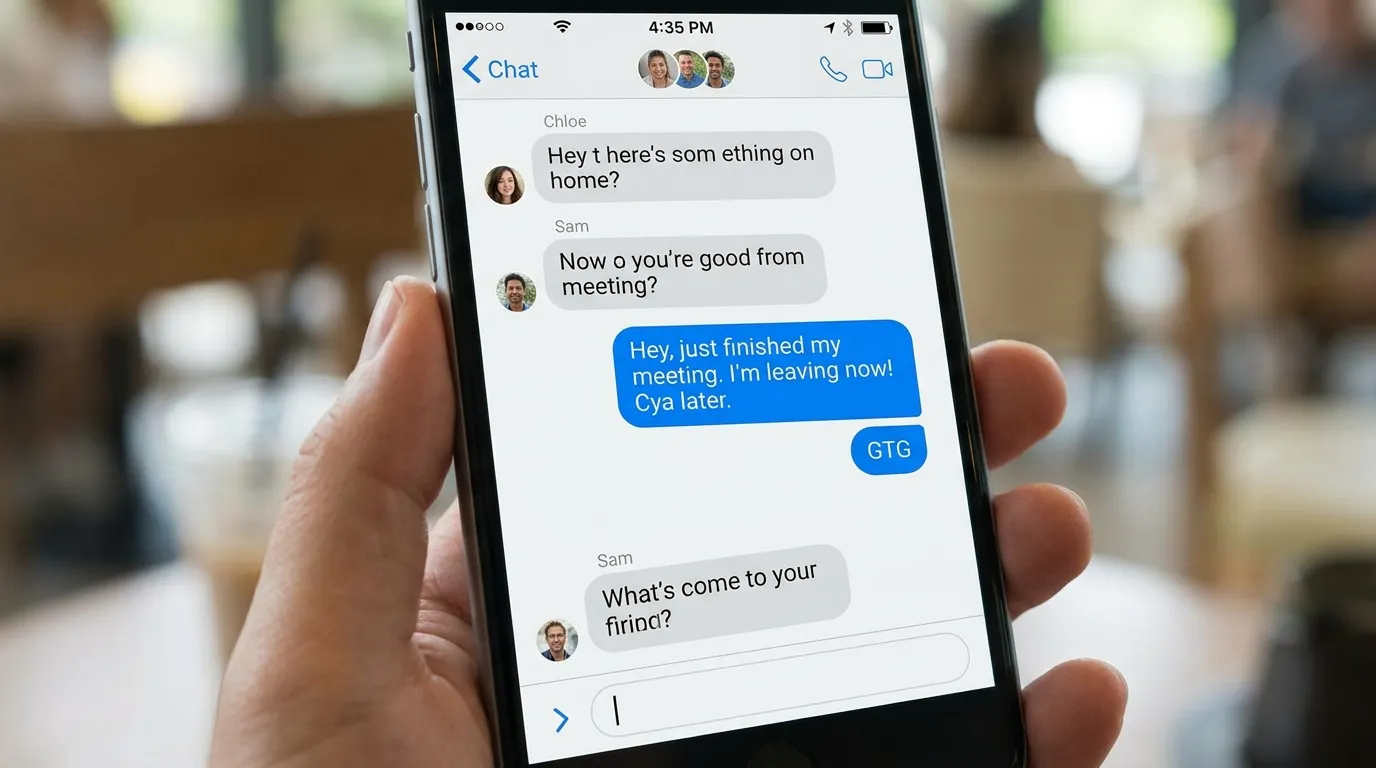
If someone suddenly sends you GTG in the middle of a conversation, it simply means they have to leave. GTG stands for “Got To Go” , one of the most widely used texting abbreviations in the world. It is a quick and polite way to let someone know you are ending the conversation or stepping away from your phone.
Understanding what GTG means in text is helpful because this short abbreviation appears everywhere WhatsApp, Snapchat, Instagram DMs, iMessage, and even online gaming chats. People use GTG when they are in a hurry, heading into a meeting, or simply wrapping up a conversation fast.
People search for GTG because it looks simple but can feel abrupt or confusing if you have never seen it before. Once you know what it means, recognizing it becomes second nature. In this guide, you will learn the full meaning of GTG, real examples of how it is used, and when it is appropriate to say it.
GTG Meaning in Text
GTG stands for “Got to Go.” It’s a common texting abbreviation people use when they need to leave a conversation, finish chatting, or tell someone they’re busy.
Rather than typing an entire sentence like “I have to leave now” or “I need to go”, many people simply type GTG because it’s quick, easy, and widely understood.
For example:
“Sorry, GTG. I’ll text you later!”
This tells the other person that the conversation is ending, but it usually doesn’t sound rude. Instead, it politely lets someone know you have something else to do.
Is GTG an Acronym or an Abbreviation?
GTG is generally considered an internet acronym because each letter represents the first letter of a phrase:
- G = Got
- T = To
- G = Go
Although some people call it an abbreviation, you’ll most often see it described as a texting acronym or chat abbreviation.
What Does GTG Mean in Everyday Conversations?
In daily conversations, GTG simply means “I need to leave now.”
People use it for many reasons, such as:
- Leaving for school or work
- Going to sleep
- Answering a phone call
- Joining a meeting
- Finishing an online game
- Running an errand
- Spending time with family
The reason usually isn’t important. The main purpose is to let the other person know the conversation is ending.
For instance:
Friend: Want to keep chatting?
You: GTG. My dinner is ready.
Or:
Friend: One more game?
You: Sorry, GTG. I have homework.
In both situations, GTG is a short and polite way to excuse yourself.
Does GTG Always Mean “Got to Go”?
Most of the time, yes.
In texting and social media, GTG almost always means “Got to Go.” That’s the meaning you’ll encounter in the vast majority of conversations.
However, in other situations, the same letters can have different meanings depending on the topic. For example, certain businesses, online communities, or technical discussions may use GTG as an abbreviation for something entirely different.
Still, if you’re chatting with friends, family, classmates, or coworkers, you can safely assume that GTG means “Got to Go.”
Why Do People Use GTG Instead of Writing the Full Phrase?
Modern messaging is built around speed.
People often send short messages while walking, commuting, working, studying, or multitasking. Typing three letters is much faster than writing a complete sentence.
Using GTG helps people:
- End conversations quickly
- Save typing time
- Sound casual and natural
- Keep chats moving
- Communicate efficiently
It’s similar to other popular texting abbreviations like BRB, IDK, and IMO, which also shorten common phrases.
Is GTG Formal or Informal?
GTG is considered an informal language.
It’s perfectly normal in:
- Text messages
- Social media chats
- Gaming conversations
- Group chats
- Messaging apps
However, it’s usually best to avoid GTG in very formal communication.
For example, instead of writing:
GTG, thanks.
A professional email might say:
I have to leave now. Thank you for your time.
Choosing the right wording depends on your audience.
Where People Use GTG
GTG appears across almost every major messaging platform. Although the meaning stays the same, the situations where people use it can vary slightly.
GTG on TikTok
TikTok users often use GTG in direct messages, livestream chats, and comment sections.
For example:
“GTG now, I’ll watch the rest later.”
Or:
“This live show is awesome but GTG.”
It simply tells others that the user is leaving.
GTG on Snapchat
Snapchat conversations are usually fast and casual, making GTG especially common.
Someone might write:
“GTG. Talk tomorrow.”
Or:
“The battery’s dying. GTG.”
Since Snapchat focuses on quick communication, abbreviations like GTG fit naturally into conversations.
GTG on Instagram
On Instagram, GTG appears in:
- Direct Messages (DMs)
- Group chats
- Story replies
- Comment conversations
Examples include:
“GTG. Thanks for replying!”
Or:
“I’ll message you later. GTG.”
The phrase politely ends the conversation without sounding abrupt.
GTG on WhatsApp
WhatsApp is one of the most common places to see GTG.
Friends and family often use it when they’re busy.
Examples include:
- “GTG. Dinner’s ready.”
- “I’ll call you later.”
- “GTG. Driving now.”
Because WhatsApp is used for everyday communication, GTG feels natural and friendly.
GTG in SMS Text Messages
Even with newer apps available, traditional text messaging still uses GTG regularly.
Someone may text:
“GTG. The meeting starts at five.”
Or:
“GTG. Mom’s calling.”
The abbreviation quickly explains why the conversation is ending.
Who Uses GTG?
GTG has been around for many years, making it familiar to people of different ages.
Teenagers and Students
Teenagers use GTG frequently while texting friends, chatting during online classes, or talking in gaming communities.
It’s one of the easiest ways to end a conversation without typing a full sentence.
Gen Z
Gen Z continues to use GTG, although they’re also familiar with many newer slang terms.
You’ll still find GTG in:
- TikTok messages
- Snapchat chats
- Discord servers
- Instagram DMs
- Gaming conversations
Even as internet slang evolves, GTG remains a reliable abbreviation that almost everyone understands.
Millennials
Many millennials grew up using GTG during the early days of instant messaging services like MSN Messenger, AOL Instant Messenger (AIM), and Yahoo Messenger.
Because of this, they still use it naturally in today’s messaging apps.
Adults and Professionals
Adults also use GTG in casual conversations with friends, coworkers, and family members.
However, in formal workplace communication or business emails, people usually write the full phrase instead of using the abbreviation.
Online Gaming Communities
GTG is especially popular among gamers.
Players often leave matches because they need to:
- Eat dinner
- Go to work
- Attend school
- Take a break
- Log off for the day
Instead of explaining everything, they simply type:
“GG everyone. GTG!”
Everyone immediately understands that they’re leaving the game.
Why GTG Is Still Popular Today
Internet slang changes quickly, yet GTG has remained popular for decades. One reason is its simplicity. It clearly communicates that someone needs to leave, and almost everyone who spends time online recognizes it.
Unlike trendy slang that fades after a few months, GTG has become part of everyday digital communication. Whether you’re chatting with friends on WhatsApp, replying to a Snapchat message, or ending a gaming session, it’s a quick and polite way to say you’re signing off.
Real Chat Examples of GTG
Understanding GTG (Got to Go) is much easier when you see it used in real conversations. Below are realistic texting examples that show how people naturally use this abbreviation in everyday chats.
Example 1: Leaving for Dinner
A: Want to keep watching videos?
B: I’d love to, but GTG.
A: No problem. Talk later!
Example 2: Heading to Class
A: Did you finish the assignment?
B: Almost. GTG, my class starts in five minutes.
A: Good luck!
Example 3: Gaming Chat
A: One more match?
B: Sorry, GTG. My parents are calling me.
A: Catch you tomorrow.
Example 4: Going to Sleep
A: Are you still awake?
B: Barely! GTG. I’m exhausted.
A: Sleep well!
Example 5: At Work
A: Can we continue this later?
B: Sure. GTG, I have a meeting.
A: Sounds good.
Example 6: Family Time
A: What are you doing tonight?
B: GTG. We’re having dinner together.
A: Have a great evening!
Example 7: Phone Battery Low
A: Why aren’t you replying?
B: My phone’s almost dead. GTG!
A: Charge it and message me later.
Example 8: Driving
A: Send me the address.
B: I will, but GTG. I’m driving now.
A: Stay safe!
Example 9: Watching a Movie
A: Are you free?
B: Not right now. GTG, the movie is starting.
A: Enjoy!
Example 10: Finishing the Conversation
A: Thanks for helping me today.
B: Anytime! GTG now.
A: See you tomorrow.
How to Reply When Someone Says “GTG”
When someone sends GTG, they’re simply letting you know they need to leave. In most situations, you don’t need a long reply. A short, friendly response works perfectly.
Here are different ways you can reply depending on the conversation.
Funny Replies
If you’re chatting with close friends, adding a little humor can make the conversation more enjoyable.
Examples:
- Don’t forget about me!
- Fine, but you owe me a reply later.
- Escape while you still can!
- I’ll pretend I’m not disappointed.
- See you after your important mission!
These replies keep the mood light while acknowledging that the person has to leave.
Casual Replies
Casual replies are the most common because they’re simple and natural.
Examples:
- Okay, talk later.
- No worries.
- Catch you later.
- Sounds good.
- See you soon.
- Alright, bye!
These responses work well with friends, classmates, and family.
Friendly Replies
If you want to sound warm and caring, try one of these replies.
Examples:
- Take care!
- Have a great day.
- Talk to you later.
- Hope everything goes well.
- Stay safe!
- Message me when you’re free.
Friendly replies help end the conversation on a positive note.
Neutral Replies
Sometimes you simply want to acknowledge the message without adding much.
Examples:
- Okay.
- Understood.
- Thanks for letting me know.
- No problem.
- See you later.
These are appropriate in both personal and professional chats.
Is GTG Rude or Offensive?
No. GTG is not considered rude or offensive.
In fact, many people use it because it’s a polite way to let someone know they’re ending the conversation instead of disappearing without saying anything.
For example, compare these two situations:
Without GTG
Someone suddenly stops replying.
This can leave the other person wondering what happened.
With GTG
“GTG. I’ll message you later.”
This clearly explains why the conversation is ending and feels much more considerate.
Is GTG Safe to Use?
Yes.
GTG is one of the safest internet abbreviations because it doesn’t contain offensive language or hidden meanings.
It’s appropriate for conversations with:
- Friends
- Family members
- Classmates
- Online gaming friends
- Most coworkers in casual chats
Because it’s widely recognized, there’s little risk of misunderstanding.
Can You Use GTG at School?
Yes.
Students often use GTG when chatting before class, after school, or while studying together online.
Examples include:
- GTG, my teacher just arrived.
- GTG class is starting.
- GTG, I need to finish my homework.
It’s perfectly acceptable in informal conversations with classmates.
Can You Use GTG at Work?
It depends on how you’re communicating.
In casual workplace messaging apps like Slack, Microsoft Teams, or internal chats, GTG is usually fine if your team communicates informally.
For example:
GTG. I’ll finish this after lunch.
However, in formal emails or communication with clients, writing the full phrase sounds more professional.
Instead of:
GTG.
You might write:
I have to leave for another meeting now. I’ll follow up this afternoon.
Knowing your audience is always important.
Does GTG Ever Have Other Meanings?
Although GTG almost always means “Got to Go” in texting, the abbreviation can occasionally represent different phrases in specialized industries or online communities.
For example, some businesses, technical discussions, or gaming groups may use GTG differently.
However, unless you’re in one of those specific environments, it’s safe to assume the sender means “Got to Go.”
Context is the easiest way to figure it out.
Why People Still Use GTG
Internet slang changes every year, yet GTG continues to remain popular.
There are several reasons for its long-lasting popularity.
It’s Fast
Typing three letters is much quicker than writing an entire sentence.
Everyone Understands It
GTG has existed for decades, so most internet users immediately recognize it.
It Sounds Friendly
Instead of ending a conversation abruptly, GTG politely lets others know you’re leaving.
It Works Everywhere
Whether you’re texting, gaming, chatting on Discord, using WhatsApp, or sending a Snapchat message, GTG fits naturally into almost every online conversation.
The Origin of GTG
The abbreviation GTG dates back to the early days of online messaging and internet chat rooms.
Long before smartphones became popular, people used instant messaging platforms like:
- AOL Instant Messenger (AIM)
- MSN Messenger
- Yahoo Messenger
- IRC chat rooms
Internet connections were slower, and people wanted to type as quickly as possible. Short abbreviations became common because they saved time during conversations.
Alongside GTG, users also began using abbreviations like:
- BRB (Be Right Back)
- LOL (Laugh Out Loud)
- IDK (I Don’t Know)
- IMO (In My Opinion)
- TTYL (Talk To You Later)
As texting became more popular on mobile phones, these abbreviations spread to SMS messages, social media, and messaging apps.
Today, GTG remains one of the most recognizable texting acronyms because its meaning is simple, practical, and easy to remember.
Unlike some modern slang that changes quickly, GTG has stayed relevant for years because people will always need a quick way to say they’re leaving a conversation.
Real-World Usage Example
Imagine you’re chatting with your best friend on WhatsApp while relaxing at home.
You’re discussing weekend plans when your family calls everyone to the dinner table.
Instead of writing a long explanation, you simply type:
GTG. Dinner’s ready. I’ll text you later!
Your friend immediately understands that you’re leaving the conversation and will continue chatting later.
This is exactly how most people use GTG in everyday life. It’s quick, polite, and easy for everyone to understand.
GTG vs Other Common Texting Abbreviations
If you’re learning internet slang, you’ll probably come across many abbreviations besides GTG. While they all make conversations shorter, each one has a different meaning and purpose.
The table below compares GTG with several popular texting abbreviations.
| Abbreviation | Meaning | Type | Common Usage | Popularity |
| GTG | Got to Go | Acronym | Leaving a conversation | Very High |
| IDK | I Don’t Know | Acronym | Expressing uncertainty | Very High |
| IDC | I Don’t Care | Acronym | Showing indifference | High |
| IMO | In My Opinion | Acronym | Sharing an opinion | High |
| BRB | Be Right Back | Acronym | Taking a short break | Very High |
Understanding the Difference
Although these abbreviations are common, they aren’t interchangeable.
- GTG means you’re ending the conversation because you have to leave.
- BRB means you’ll be back soon and plan to continue chatting.
- IDK is used when you don’t know the answer to a question.
- IDC expresses that something isn’t important to you.
- IMO your personal opinion.
For example:
Friend: Are you staying online?
You: GTG. I have to leave now.
Here, GTG fits perfectly because you’re ending the conversation.
Similar Texting Acronyms to GTG
Once you know what GTG means, it’s helpful to learn a few other abbreviations you’ll often see in text messages and social media.
TTYL
TTYL stands for “Talk To You Later.”
People use it when they’re ending a conversation but expect to chat again soon.
Example:
TTYL! Have a great evening.
BRB
BRB means “Be Right Back.”
Unlike GTG, BRB usually suggests the person will return after a short break.
Example:
BRB. Someone’s at the door.
AFK
AFK stands for “Away From Keyboard.”
Gamers and remote workers often use AFK when stepping away from their computer for a few minutes.
Example:
AFK for lunch.
CYA
CYA means “See You.”
It’s another casual way to end a conversation.
Example:
CYA tomorrow!
BBL
BBL stands for “Be Back Later.”
It’s similar to BRB but usually means the person will be gone longer.
Example:
BBL. I have an appointment.
Common Mistakes When Using GTG
Although GTG is simple, there are a few mistakes beginners sometimes make.
Using GTG in Formal Emails
GTG works well in casual conversations but isn’t suitable for professional emails or official communication.
Instead of writing:
GTG. Thanks.
Write:
I have to leave now. Thank you for your time.
Professional writing should use complete sentences.
Assuming Everyone Knows Internet Slang
While GTG is widely recognized, some people—especially those who don’t use social media often may not know what it means.
If you’re unsure, writing the full phrase can avoid confusion.
Using GTG Too Early
Sometimes people send GTG even though they continue chatting for another ten minutes.
This can confuse the other person.
It’s best to use GTG when you’re actually about to leave the conversation.
Confusing GTG with BRB
This is one of the most common mistakes.
Remember:
- GTG = Leaving the conversation.
- BRB = Taking a short break and returning soon.
Choosing the right abbreviation helps avoid misunderstandings.
Tips for Using GTG Naturally
If you’re new to texting abbreviations, these simple tips will help you use GTG confidently.
- Use GTG only when you’re actually leaving.
- Add a friendly message if possible.
- Don’t use it in formal business emails.
- Use it in casual chats with friends and family.
- If someone doesn’t understand it, simply write “Got to Go.”
These habits make your conversations clearer and more natural.
FAQs:
What does GTG mean in text messages?
GTG usually stands for “Got to Go.” People use it to let someone know they’re leaving a conversation or won’t be able to continue chatting.
What does GTG mean on TikTok?
On TikTok, GTG has the same meaning as in texting. Users often write it in comments, livestream chats, or direct messages to say they need to leave.
Is GTG slang?
GTG is best described as a texting acronym or internet abbreviation. While many people include it under internet slang, its primary purpose is to shorten the phrase “Got to Go.”
Is GTG rude or offensive?
No. GTG isn’t rude or offensive. It’s generally considered a polite way to tell someone you’re ending a conversation instead of disappearing without saying anything.
How should you reply to GTG?
A simple, friendly reply is usually enough.
Some good responses include:
- Talk later!
- No worries.
- See you soon.
- Take care.
- Have a great day!
Choose a reply that matches the tone of your conversation.
Final Thoughts:
GTG is one of the oldest and most widely used texting abbreviations, yet it remains just as useful today. Whether you’re chatting with friends, sending a WhatsApp message, talking on Snapchat, or participating in an online gaming session, GTG provides a quick and polite way to say you need to leave.
Because it simply means “Got to Go,” it’s easy to understand and appropriate for most casual conversations. Just remember that it’s informal, so writing the full phrase is usually the better choice in professional emails, academic writing, or other formal situations.
As you become more familiar with internet slang, you’ll notice GTG alongside many other abbreviations like BRB, IDK, and IMO. Learning these common expressions can make online conversations easier to follow and help you communicate more naturally across different social media platforms and messaging apps.