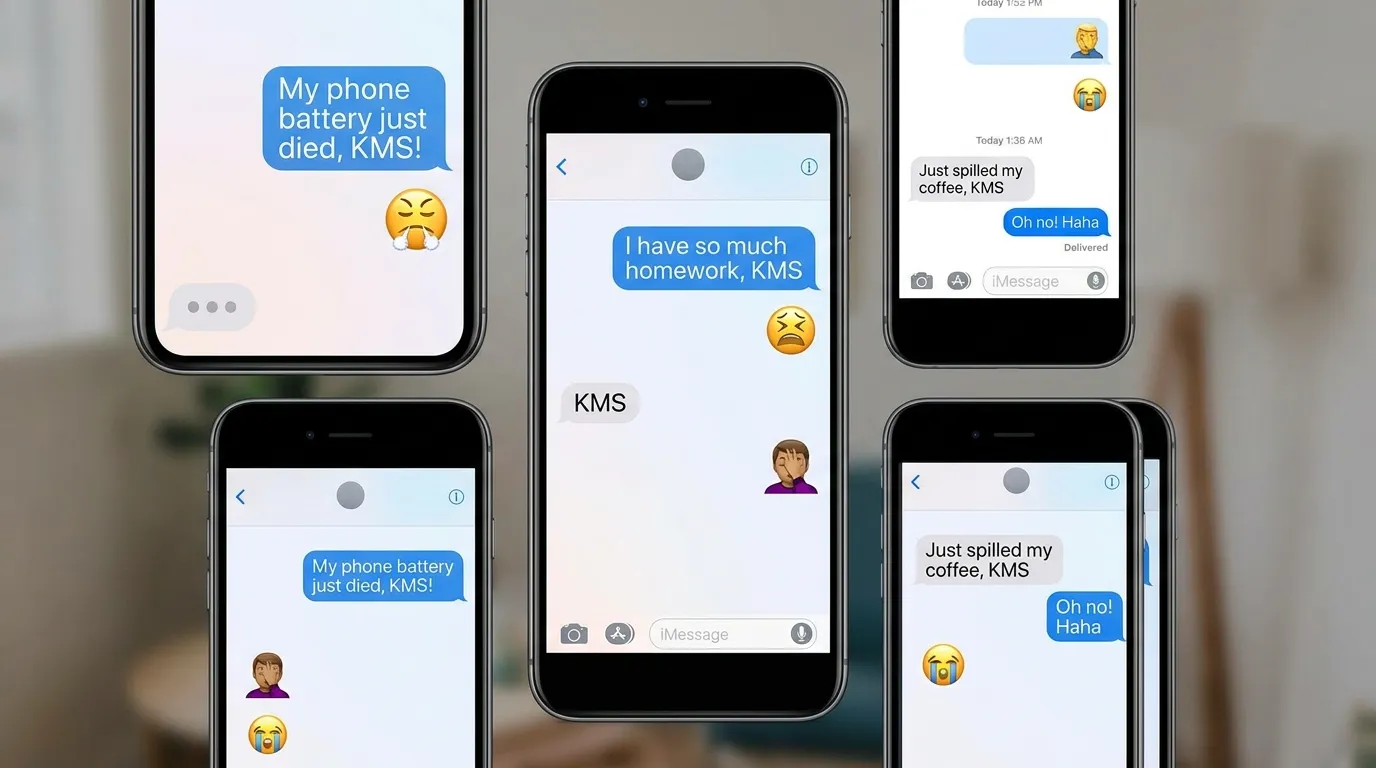
If someone sent you KMS in a text and you were unsure what it meant, it is important to understand this one carefully. KMS most commonly stands for “Kill Myself” in text messages and online conversations. In most cases, people use it as a dramatic and exaggerated expression of frustration, embarrassment, or overwhelming stress, not as a literal statement.
Understanding what KMS means in text matters because this abbreviation appears regularly on Snapchat, Twitter/X, Instagram, and in everyday text conversations, especially among teenagers and young adults. It is mostly used humorously when someone feels annoyed or overwhelmed by something minor, like failing a test or being embarrassed in front of friends.
However, context always matters with KMS. While it is often used casually and jokingly, it is important to take it seriously if someone appears genuinely distressed. This guide explains every meaning of KMS, where and how people use it, and when it is important to check in on someone who sends it your way.
What KMS Mean in Text
KMS is an internet acronym that most commonly stands for “kill myself.” It is widely used in texting and online conversations as a slang expression. Although the phrase sounds serious, many people use it casually to show they are extremely embarrassed, annoyed, disappointed, or overwhelmed by a small everyday situation.
For example, someone might accidentally send a message to the wrong person and text, “KMS, that was so embarrassing.” In this situation, they are usually expressing embarrassment rather than stating a real intention to harm themselves.
However, context matters. Sometimes KMS may be used by someone who is experiencing genuine emotional pain. Because of this, it’s important not to automatically assume it’s always a joke.
Is KMS a Slang Word or an Acronym?
KMS is an acronym because it is formed from the first letters of the phrase “kill myself.” Over time, it has also become part of internet slang because people use it as a quick emotional reaction in online conversations.
Like many internet abbreviations, KMS is mainly used in informal settings. It is not considered appropriate language for school assignments, business emails, or professional communication.
What Does KMS Mean in Everyday Chat?
In everyday texting, KMS is often used to express strong emotions without intending the literal meaning. People commonly use it after something awkward, frustrating, or disappointing happens.
Some examples include:
- Forgetting an important homework assignment.
- Losing a game at the last second.
- Tripping in front of classmates.
- Accidentally liking someone’s old Instagram photo.
- Sending a message with embarrassing spelling mistakes.
In these situations, KMS usually means something closer to:
- “I’m so embarrassed.”
- “This is so frustrating.”
- “I can’t believe that happened.”
- “That was awful.”
Even though these are the intended meanings in many casual conversations, it’s still a phrase that should be used carefully because it can also refer to real emotional struggles.
Why Do People Use KMS?
Internet slang often helps people express emotions quickly. Instead of writing a long explanation, users sometimes type short abbreviations that everyone in their friend group understands.
People may use KMS to express:
- Embarrassment
- Frustration
- Disappointment
- Regret
- Shock
- Self-deprecating humor
This is one reason why KMS became popular on social media, where short messages and quick reactions are common.
Where People Use KMS
KMS appears across many social media platforms and messaging apps. While the meaning usually stays the same, the way people use it can vary depending on where they’re chatting.
KMS on TikTok
On TikTok, KMS often appears in comments, captions, and reaction videos. Users may write it after watching an embarrassing or funny clip to exaggerate how awkward or relatable the situation feels.
Because TikTok has millions of users from different backgrounds, it’s always worth paying attention to the context before assuming the meaning.
KMS on Snapchat
Snapchat conversations are usually casual and fast-paced, making abbreviations extremely common. Friends may send KMS after an embarrassing selfie, a failed streak, or an awkward conversation.
Since Snapchat messages disappear quickly, people often use internet slang without explaining what it means.
KMS on Instagram
On Instagram, KMS may appear in comments, direct messages, Stories, or meme pages. People often use it while reacting to humorous posts or sharing embarrassing moments from their day.
However, if someone posts KMS alongside messages about feeling hopeless or emotionally overwhelmed, it’s best to respond with kindness rather than assuming they’re joking.
KMS on WhatsApp
WhatsApp is commonly used for chatting with friends and family. Younger users sometimes include KMS in casual conversations after making a mistake or dealing with a frustrating situation.
Because WhatsApp is also used for more personal conversations, context becomes especially important when reading messages that include this abbreviation.
KMS in SMS Text Messages
Traditional text messages still include plenty of internet slang, and KMS is no exception. Friends who already understand online abbreviations may use it naturally during conversations.
If you receive KMS from someone and you’re unsure what they mean, asking a simple follow-up question is usually the best approach instead of making assumptions.
Real Chat Examples
Here are five realistic examples showing how KMS may appear in everyday conversations.
Example 1
A: I accidentally waved back at someone who wasn’t waving at me.
B: 😂
A: KMS, that was so embarrassing.
Example 2
A: I studied the wrong chapter for today’s test.
B: Seriously?
A: Yep… KMS.
Example 3
A: I just sent my boss the meme instead of my report.
B: Wait, what?
A: KMS. I can’t believe I did that.
Example 4
A: I liked a photo from 2018 by accident.
B: That’s the worst!
A: KMS, I’m logging off for today.
Example 5
A: I forgot my presentation was today.
B: Oh no!
A: KMS. I have to present without any notes.
Real Chat Examples
Here are five more realistic conversations that show how people may use KMS in everyday texting. Remember, while these examples show casual usage, the meaning always depends on the situation and the person’s overall message.
Example 6
A: I missed the bus by five seconds.
B: That’s so unlucky.
A: KMS, now I’m going to be late.
Example 7
A: I spent two hours on my project and forgot to save it.
B: No way!
A: Yep… KMS.
Example 8
A: Everyone saw me trip walking into class.
B: Are you okay?
A: Yeah, I’m fine. KMS, though. That was embarrassing.
Example 9
A: I called my teacher “Mom” today.
B: 😂 That happens!
A: KMS. I wanted to disappear.
Example 10
A: I wore mismatched shoes to work.
B: Did anyone notice?
A: Unfortunately, yes. KMS.
These examples show why context matters. In each conversation, KMS is being used to express embarrassment or frustration. If someone uses it alongside comments about feeling hopeless, wanting to disappear, or other signs of emotional distress, it’s important to check in with them instead of assuming they’re joking.
How to Reply When Someone Says “KMS”
There isn’t one perfect reply because the right response depends on the conversation. If someone is clearly joking about a minor mistake, a lighthearted reply may fit. If the message seems serious or out of character, it’s better to respond with care and ask how they’re doing.
Funny Replies
These responses work only when you’re confident the conversation is playful and both people are comfortable joking together.
- “You’ll survive this one. 😂”
- “That’ll be funny tomorrow!”
- “We’ve all done something like that.”
- “At least you gave everyone a story to tell.”
- “You’re not the first person to do that.”
Casual Replies
These are simple, everyday responses.
- “Don’t worry about it.”
- “It’s not as bad as you think.”
- “You’ll laugh about it later.”
- “Everyone makes mistakes.”
- “Tomorrow is another day.”
Friendly Replies
If you want to be supportive, these replies show kindness without making assumptions.
- “Are you okay?”
- “Don’t be too hard on yourself.”
- “I’m here if you want to talk.”
- “It’s okay everyone has embarrassing moments.”
- “You’ve got this.”
Neutral Replies
These responses fit situations where you’re unsure what the other person means.
- “What happened?”
- “Everything okay?”
- “Can you tell me what happened?”
- “I’m listening.”
- “Hope things get better.”
If there’s any chance the person is expressing genuine emotional pain rather than joking, it’s best to respond with empathy instead of humor.
Is KMS Rude or Offensive?
KMS isn’t usually considered a rude word in the same way as profanity, but it can be upsetting because it refers to suicide. Whether it’s offensive depends on the audience, the situation, and the intention behind the message.
Among close friends, some people use KMS casually to exaggerate embarrassment or frustration. In these groups, everyone may understand that the speaker isn’t being literal.
However, not everyone interprets it that way. Someone who has experienced mental health struggles or lost a loved one to suicide may find the phrase hurtful or insensitive, even if it was meant as a joke.
Is It Safe to Use?
Although you’ll see KMS across social media, it’s generally better to avoid using it if you’re talking to people you don’t know well.
There are plenty of alternatives that express frustration without referring to self-harm, such as:
- “I’m so embarrassed.”
- “That was awkward.”
- “I can’t believe I did that.”
- “What a disaster!”
- “That was so frustrating.”
These phrases communicate the same feeling while avoiding language that could be misunderstood.
Is It Appropriate at School or Work?
Generally, no.
KMS is considered informal internet slang and isn’t suitable for professional emails, workplace chats, classroom discussions, or communication with teachers and clients.
In formal settings, clear and respectful language is always the better choice.
Who Uses This Term?
KMS is most common among younger internet users, although people of many ages may recognize it because of social media.
Gen Z and Teenagers
Gen Z uses internet abbreviations more frequently than older generations. Many teenagers first encounter KMS through memes, TikTok videos, gaming communities, or group chats with friends.
For them, it often functions as an exaggerated reaction to something embarrassing or annoying.
Young Adults
College students and young professionals may also use KMS while texting friends or chatting on platforms like Discord, Snapchat, or Instagram.
Most understand the slang, but many choose not to use it because of its sensitive meaning.
Older Users
Older adults are less likely to use KMS themselves, but they may search for its meaning after seeing it in messages from younger family members or online comments.
This is one reason why searches for “What does KMS mean in text?” have become increasingly common.
Where Does It Appear Most Often?
You’ll commonly find KMS on:
- TikTok
- Snapchat
- Discord
- X (formerly Twitter)
- SMS text messages
- Online gaming chats
- Meme pages
- Group conversations
The abbreviation spreads quickly because short internet slang is easy to type and fits naturally into fast-moving online conversations.
Origin of the Term
Like many internet abbreviations, the exact origin of KMS isn’t fully documented. Most researchers believe it became popular through early online chat rooms, internet forums, and multiplayer gaming communities where people regularly shortened common phrases.
As texting became more popular in the 2000s, abbreviations such as LOL, BRB, IDK, and KMS spread rapidly because they saved time and made conversations faster.
Social media platforms later introduced the abbreviation to much larger audiences. Meme culture, reaction posts, and short-form videos helped make KMS a familiar expression among many younger internet users.
Today, the abbreviation continues to appear across social media, but awareness has also grown that it can carry a much more serious meaning depending on the context. Because of this, many people now encourage using more thoughtful language, especially when talking with people you don’t know well.
Comparison Table
The table below compares KMS with some of the most common internet abbreviations. While they are all widely used in online conversations, each serves a different purpose.
| Abbreviation | Meaning | Type | Common Usage | Popularity |
| KMS | “Kill myself” (often used as an exaggerated expression of embarrassment or frustration, but can also indicate genuine distress depending on context) | Acronym / Internet Slang | Texting, social media, memes, chats | High |
| IDK | I Don’t Know | Acronym | Casual conversations, texting, social media | Very High |
| IDC | I Don’t Care | Acronym | Informal chats and messaging apps | High |
| IMO | In My Opinion | Acronym | Discussions, forums, social media | High |
| BRB | Be Right Back | Acronym | Gaming, texting, online chats | Very High |
Although all of these abbreviations are common online, KMS is different because it can carry a sensitive meaning. Unlike IDK or BRB, it refers to self-harm language, so readers should always consider the context before interpreting or using it.
Real-World Usage Example
Imagine you’re chatting with a close friend after school.
Your friend accidentally gives the wrong answer during a class presentation, and everyone laughs. A few minutes later, they text you:
“KMS… I can’t believe I said that in front of everyone.”
In this situation, your friend is probably expressing embarrassment rather than speaking literally. A supportive reply could be:
“Don’t worry it happens to everyone. You’ll laugh about it later.”
Now imagine a different situation.
Someone sends a message like:
“KMS. Nothing matters anymore.”
This message is very different because it may reflect genuine emotional pain rather than casual frustration. Instead of joking back, it’s best to respond with kindness, ask how they’re doing, encourage them to talk, and, if you’re concerned they’re in immediate danger, seek help from a trusted adult or appropriate local emergency resources.
The key lesson is simple: the context of the conversation matters much more than the abbreviation itself.
FAQs:
What does KMS mean in text messages?
KMS usually stands for “kill myself.” Many people use it online to exaggerate embarrassment or frustration, but depending on the situation, it may also express genuine emotional distress.
What does KMS mean on TikTok?
On TikTok, KMS often appears in comments, captions, and memes as a dramatic reaction to something awkward, funny, or embarrassing. However, the meaning should always be understood from the surrounding context.
Is KMS slang?
Yes. KMS is an internet slang acronym that has become popular in texting, gaming communities, and social media conversations.
Is KMS rude or offensive?
It isn’t considered a swear word, but many people find it insensitive because it refers to suicide. For that reason, it’s generally better to avoid using it casually, especially around people you don’t know well.
How should you reply to KMS?
If it seems like someone is joking about an embarrassing moment, a kind and reassuring reply is usually appropriate. If there’s any indication they may be expressing real emotional pain, respond with empathy, check in on them, and encourage them to seek support from someone they trust.
Conclusion:
Now you have a complete and clear understanding of what KMS means in text. In most everyday conversations, KMS stands for “Kill Myself” used almost always as an exaggerated, dramatic expression when someone feels frustrated, embarrassed, or overwhelmed by something in their daily life. It is rarely meant literally and is widely understood as a form of venting in casual texting culture.
You will see KMS most often on Snapchat, Twitter/X, Instagram, and group text chats where teens and young adults express strong emotions in a lighthearted and exaggerated way. Saying KMS after a minor embarrassing moment has become completely normal in today’s texting slang.
That said, always pay attention to the full context of a conversation. If someone seems genuinely upset, sad, or distressed, it is always worth checking in on them with care and kindness rather than assuming it is just slang.
If you or someone you know is struggling emotionally, reaching out to a trusted person or a mental health resource is always the right step.