If you’ve ever received a message with “OBV” and wondered what it means, you’re not alone. Understanding what OBV mean in text is now more important than ever as slang takes over everyday digital conversations.
OBV is a short and simple abbreviation used widely in texting, social media, and online chats. It saves time and makes messages feel more casual and friendly. You’ll find it on platforms like Instagram, Snapchat, WhatsApp, and Twitter.
Whether you’re a teen, a parent trying to understand your child’s messages, or simply someone who wants to stay updated with internet language, this guide breaks it all down clearly.
We’ll cover the real meaning of OBV, how it’s used in different situations, real-life examples, and why it’s trending across social media platforms. By the end, you’ll confidently know exactly what OBV mean in text and how to use it yourself.
OBV Meaning in Text
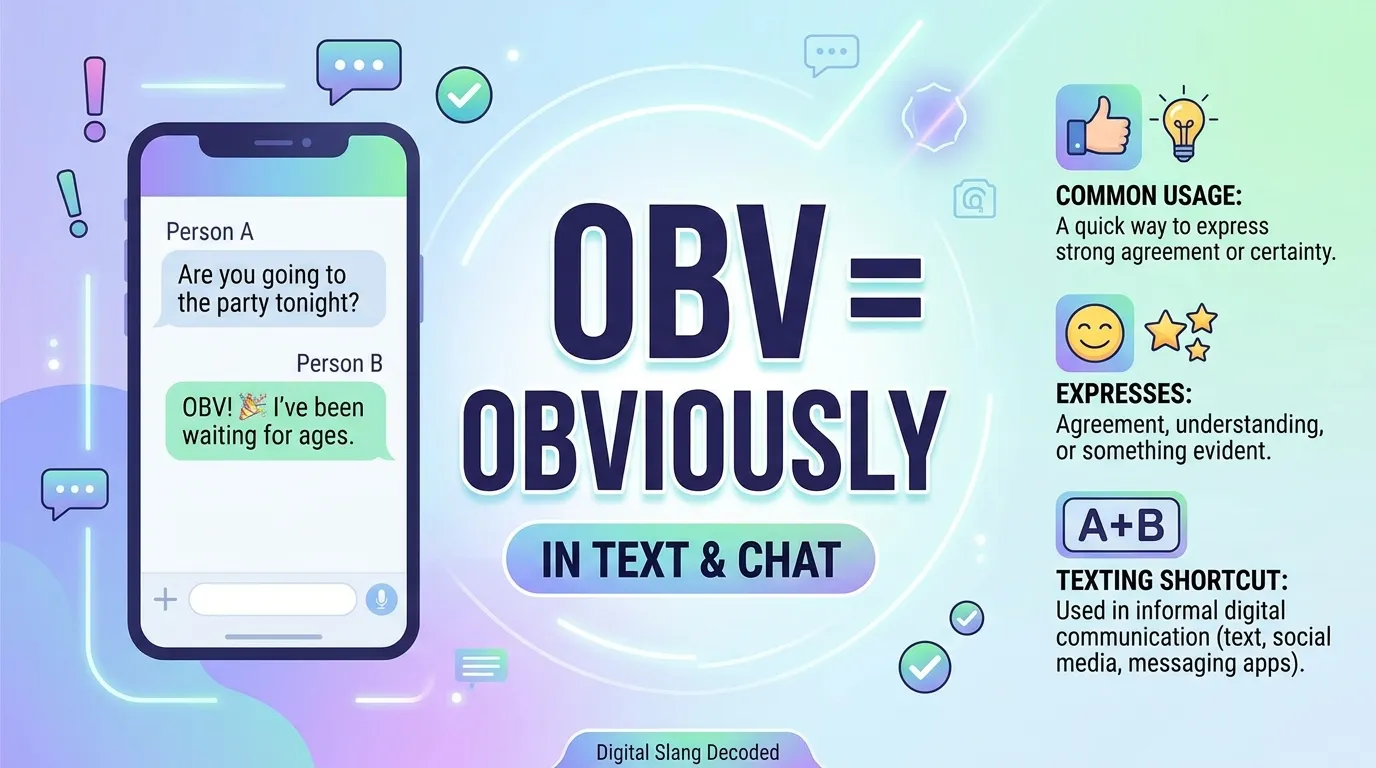
In texting, OBV is simply a shortened version of the word “obviously.” Instead of typing the entire word, people use three letters to keep conversations fast and informal.
Unlike some internet terms that have multiple meanings, OBV is straightforward. In most situations, it carries the same meaning as saying “of course,” “clearly,” or “that’s obvious.”
For example:
- “OBV I’m coming to the party.”
- “OBV I watched the new episode already.”
- “OBV that’s the right answer.”
The meaning depends on the conversation, but it usually shows that the speaker thinks something is clear or expected.
Is OBV an Acronym or an Abbreviation?
Technically, OBV is an abbreviation rather than a true acronym.
- Abbreviation: A shortened form of a word.
- Acronym: A word formed from the first letters of multiple words.
Since OBV shortens the single word “obviously,” it is considered an abbreviation.
Many people casually call it an acronym because it’s written in capital letters, but the difference doesn’t matter in everyday conversations.
What Does OBV Mean in Everyday Chat?
People use OBV when they want to point out something they believe everyone already knows.
For instance:
- Your friend asks if you’re excited about a concert.
- You reply, “OBV!”
Here, you’re saying, “Obviously I am.”
Sometimes it also adds a playful or sarcastic tone. Friends often use it jokingly when teasing each other.
Example:
Friend: “Did you eat the last slice of pizza?”
You: “OBV 😂”
In this case, the abbreviation makes the conversation feel relaxed and friendly.
Where People Use OBV
The abbreviation appears across many social media platforms and messaging apps. While it isn’t as common as terms like “LOL” or “IDK,” many internet users recognize it.
TikTok
On TikTok, OBV often appears in video captions and comments.
Examples include:
- “OBV this trend is amazing.”
- “OBV I had to try this.”
Creators also use it when reacting to popular challenges or viral videos. It helps keep captions short while matching the casual style of the platform.
Snapchat
Snapchat conversations are usually quick and informal, making abbreviations very popular.
Someone might send:
“OBV I’m still awake.”
Or:
“OBV send me the pictures.”
Because messages disappear quickly, users prefer shorter words that are easy to type.
On Instagram, OBV appears in comments, captions, Stories, and direct messages.
Examples:
- “OBV this outfit looks great.”
- “OBV I liked your post.”
- “OBV I’m following.”
Influencers and regular users both use the abbreviation when chatting with friends or responding to comments.
WhatsApp is one of the most common places to see OBV.
Friends and family often use it in everyday conversations.
Examples:
- “OBV I’ll be there.”
- “OBV I remember.”
- “OBV you should come.”
Since WhatsApp is used worldwide, you’ll mostly see OBV among younger users who are familiar with internet slang.
SMS (Text Messages)
Even in regular phone texting, people sometimes use OBV instead of writing the full word.
For example:
- “OBV I’m calling later.”
- “OBV I can’t wait.”
- “OBV I’ll let you know.”
Although SMS has fewer abbreviations today than it did years ago, many people still use short forms to type faster.
Real Chat Examples
Below are realistic conversations showing how people naturally use OBV in text messages.
Example 1
A: Are you coming tonight?
B: OBV.
A: Great! See you there.
Example 2
A: Did you finish the assignment?
B: OBV. I finished it yesterday.
A: Nice work.
Example 3
A: You’re watching the game, right?
B: OBV! I’ve been waiting all week.
A: Same here.
Example 4
A: Is that your favorite singer?
B: OBV.
A: I knew it.
Example 5
A: Did you already see the movie?
B: OBV. It was amazing.
A: No spoilers!
Example 6
A: You’re ordering pizza?
B: OBV. Want anything?
A: Pepperoni, please.
Example 7
A: Are you still awake?
B: OBV.
A: Good. Let’s talk.
Example 8
A: You forgot your charger again?
B: OBV… I always do.
A: That’s so you.
Example 9
A: Do you like the new phone?
B: OBV. It’s much faster.
A: I’m thinking about buying one.
Example 10
A: Did everyone know about the surprise?
B: OBV not. That’s why it’s a surprise.
A: Good point.
How to Reply When Someone Says “OBV”
The best reply depends on the tone of the conversation. Sometimes the person is joking, while other times they’re simply answering quickly.
Funny Replies
If you’re chatting with close friends, you can keep the conversation playful.
Examples:
- “Well, thanks for making it so obvious.”
- “I had to ask anyway.”
- “You’re always one step ahead.”
- “Fair enough!”
- “I should’ve guessed.”
Casual Replies
These work in everyday conversations.
- “Got it.”
- “Makes sense.”
- “True.”
- “Okay.”
- “I figured.”
Friendly Replies
If you want to keep the conversation warm and positive, try these responses.
- “Haha, that’s what I thought.”
- “Good to know!”
- “Thanks!”
- “Awesome.”
- “Glad we’re on the same page.”
Neutral Replies
Professional or neutral conversations call for simple responses.
- “Understood.”
- “Thanks for confirming.”
- “Okay, noted.”
- “That clears things up.”
- “I appreciate the clarification.”
In most situations, OBV isn’t meant to sound rude. It’s simply a quicker way of saying “obviously.” However, tone always matters. If someone uses it with sarcasm, it can come across differently than when it’s used in a friendly conversation.
Is OBV Rude or Offensive?
One of the most common questions people ask is whether OBV is considered rude. The short answer is no. In most conversations, it is simply a casual abbreviation for “obviously.”
However, like many internet expressions, the tone depends on how it is used. A friendly conversation between close friends can make “OBV” sound lighthearted or playful. In a serious discussion, the same word may come across as impatient or slightly dismissive.
For example:
Friendly:
A: Are you excited for the weekend?
B: OBV! I’ve been waiting all week.
This sounds cheerful and natural.
Now compare it with this:
A: Did you read the instructions?
B: OBV.
Although the meaning is the same, the reply may sound a little sharp because it gives a very short answer.
Is It Safe to Use?
Yes. OBV is generally safe to use in everyday texting and online conversations.
You can use it when chatting with:
- Friends
- Family members
- Classmates
- Gaming friends
- Social media followers
Most internet users understand what it means, especially younger audiences.
Should You Use It at School or Work?
In casual conversations with classmates, using OBV is usually fine.
In professional settings, however, it is often better to write the full word “obviously” or choose a more polite alternative such as:
- Of course.
- Certainly.
- Yes, that’s correct.
- Absolutely.
Professional communication should remain clear and respectful. Short internet abbreviations can sometimes sound too informal.
Who Uses This Term?
Although almost anyone can use OBV, it is especially popular among people who spend a lot of time communicating online.
Gen Z
Gen Z uses internet abbreviations more frequently than older generations.
On fast-moving platforms, typing fewer letters saves time. Instead of writing “obviously,” many simply type OBV.
Teenagers and Young Adults
High school students, college students, and young adults regularly use internet slang while texting friends.
You might see conversations like:
“OBV I’m going.”
“OBV I watched it already.”
These short replies match the quick pace of modern messaging.
Social Media Users
People who regularly use social media often recognize OBV because they see similar abbreviations every day.
It may appear in:
- Comments
- Captions
- Direct messages
- Story replies
- Group chats
How Common Is It?
While OBV is not as famous as abbreviations like LOL, OMG, or IDK, it still appears regularly in online conversations.
Its popularity has grown because people prefer shorter messages, especially on mobile devices.
Origin of the Term
Unlike some internet slang that started on one specific website, the exact origin of OBV is difficult to trace.
Most experts believe it developed naturally as people looked for faster ways to type common words.
Instead of writing:
“Obviously.”
People simply shortened it to:
“OBV.”
This follows the same pattern as many other internet abbreviations, including:
- BTW (By the Way)
- BRB (Be Right Back)
- IDK (I Don’t Know)
- IMO (In My Opinion)
As texting became more popular during the early years of smartphones and instant messaging, shortened words became part of everyday online language.
Today, OBV continues to appear across social media, messaging apps, and casual online conversations.
Comparison Table
| Term | Meaning | Type | Usage | Popularity |
| OBV | Obviously | Abbreviation | Casual texting and social media | Medium |
| IDK | I Don’t Know | Acronym | Everyday texting | Very High |
| IDC | I Don’t Care | Acronym | Casual conversations | High |
| IMO | In My Opinion | Acronym | Opinions and discussions | High |
| BRB | Be Right Back | Acronym | Temporary absence in chats | High |
Looking at these examples, you’ll notice that OBV fits naturally alongside other popular texting abbreviations. They all help people communicate more quickly without changing the overall meaning of the conversation.
Real-World Usage Example
Imagine you’re planning a movie night with a group of friends.
One friend sends a message:
“Who’s bringing snacks?”
Another replies:
“OBV I’ll bring popcorn.”
Everyone immediately understands that the person is saying they were already planning to bring popcorn.
Here’s another example.
A group of classmates is discussing tomorrow’s test.
One student asks:
“Did everyone study?”
Another responds:
“OBV. I don’t want to fail!”
The abbreviation keeps the conversation short while expressing confidence.
These everyday situations show why people like using OBV. It saves time and feels natural in casual chats.
FAQs:
What does OBV mean in text messages?
In text messages, OBV usually means “obviously.” It is a shortened way of saying that something is clear or expected.
What does OBV mean on TikTok?
On TikTok, OBV has the same meaning. Users often include it in captions, comments, or replies to express that something is obvious or expected.
Is OBV slang?
Yes. OBV is commonly considered internet slang because it is an informal abbreviation used in online conversations and texting.
Is OBV rude or offensive?
No. OBV is not offensive. However, depending on the tone of the conversation, it may sound sarcastic or impatient if used as a very short reply.
How should you reply to OBV?
You can reply naturally based on the conversation. Common responses include:
- “Got it.”
- “Makes sense.”
- “True.”
- “Fair enough.”
- “I thought so.”
Choose a reply that matches the tone of the chat.
Conclusion:
Now you know what OBV means in text and why people use it so often online. In most conversations, it simply stands for “obviously“ and helps people communicate more quickly.
You’ll commonly see it on TikTok, Snapchat, Instagram, WhatsApp, and in regular text messages. It is a casual abbreviation that fits naturally into conversations with friends and family.
Although OBV is generally polite, remember that tone matters. In informal chats, it usually sounds friendly or playful. In professional or formal settings, writing the full word “obviously” or using a more polite phrase is often the better choice.
The next time someone sends you “OBV,” you’ll know exactly what they mean and how to respond with confidence.