If you’ve spotted “GMFU” in a text, comment, or social media post and felt completely lost, you’re not alone. Slang terms like this spread fast online, and keeping up can be tricky.
The GMFU meaning isn’t complicated once you break it down, and understanding it can help you follow conversations on platforms like TikTok, Instagram, and Snapchat without feeling left out.
In this guide, we’ll explain exactly what GMFU stands for, where it came from, and how people are using it in real conversations today.
if a friend sent it in a text or you saw it trending in comments, you’ll walk away knowing exactly what it means and when it’s appropriate to use yourself.
GMFU Meaning in Text
Why Is GMFU Popular in text Conversations?
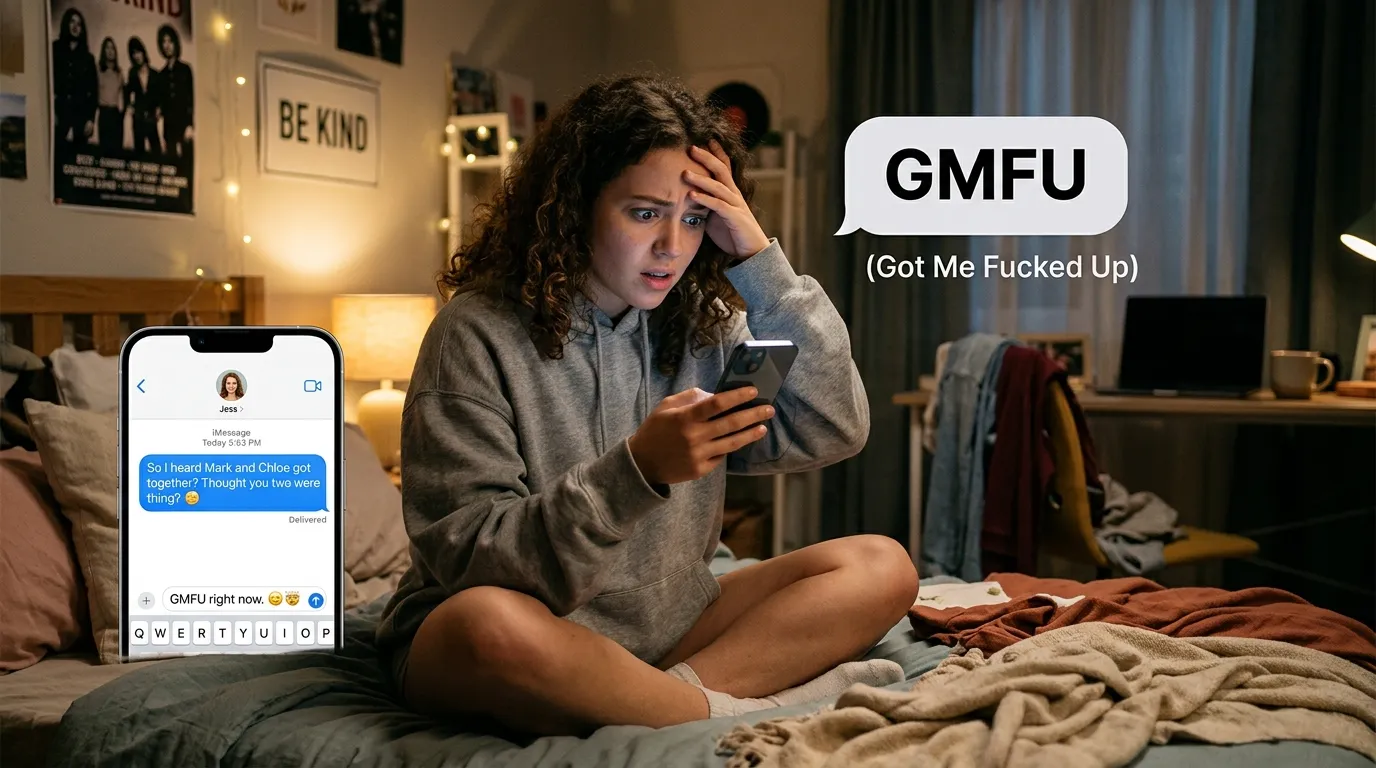
GMFU stands for “Got Me F*ed Up.”** It is an internet slang acronym people use when they feel shocked, annoyed, frustrated, offended, or think someone is acting unfairly or irrationally.
Instead of typing the full phrase, users shorten it to GMFU because it’s quicker and more common in online conversations.
Unlike many internet abbreviations that simply save time, GMFU also carries emotion. It tells the reader that the speaker has a strong reaction to something that happened.
Is GMFU an Acronym or Slang?
GMFU is both an acronym and internet slang.
- Acronym: Because each letter represents a word in the phrase.
- Slang: Because it is an informal language mostly used online and in casual conversations.
You probably won’t see GMFU in newspapers, academic writing, business emails, or professional communication. Instead, it’s commonly found in text messages, memes, social media comments, and private chats.
What Does GMFU Really Mean?
Although the literal phrase is the same, the meaning changes depending on the conversation.
People use GMFU to express:
- Surprise
- Anger
- Confusion
- Frustration
- Feeling disrespected
- Disappointment
- Amazement
- Feeling someone crossed a line
Think of GMFU as saying:
- “You’re kidding.”
- “That can’t be real.”
- “You’re being ridiculous.”
- “Seriously?”
- “I can’t believe this.”
The exact meaning depends on the tone of the conversation.
Different Meanings in Different Situations
One interesting thing about internet slang is that the same word can express different emotions.
Here are a few examples.
When Someone Is Angry
Friend: “He canceled five minutes before the movie.”
You: “GMFU.”
Here, it means you’re frustrated.
When You’re Shocked
Friend: “I won free concert tickets.”
You: “GMFU! That’s amazing.”
Here, the phrase expresses surprise instead of anger.
When Someone Is Being Unreasonable
Friend: “My boss wants me to work all weekend.”
You: “Nah, they got you GMFU.”
This means the boss is asking for something unreasonable.
When Used as a Joke
Friends often use GMFU playfully.
Friend: “I finished the pizza without you.”
You: “GMFU 😂”
In this case, nobody is actually angry. The expression simply makes the joke sound funnier.
Why Is GMFU So Popular?
What Does GMFU Mean in Text on Social Media?
Modern texting is all about speed. Instead of typing long sentences, people use abbreviations to communicate quickly.
Just as people say:
- LOL
- BRB
- IDK
- IMO
- TBH
they also use GMFU when reacting emotionally.
Social media has made slang spread faster than ever. A phrase that becomes popular on TikTok today might appear in millions of comments by next week.
Because GMFU is short and expressive, it has become a favorite among younger users.
Where People Use GMFU
You’ll mostly find GMFU in informal online conversations rather than face-to-face communication.
Let’s look at where it appears most often.
GMFU on TikTok
TikTok is one of the biggest reasons internet slang spreads so quickly.
Creators often use GMFU in:
- Video captions
- Comments
- Reaction videos
- Memes
- Comedy clips
For example:
“That plot twist had me GMFU.”
Or:
“Bro really did that? GMFU.”
Many TikTok users understand the abbreviation immediately because it has become part of everyday internet language.
GMFU on Snapchat
Snapchat conversations are usually casual and fast.
Friends use GMFU after hearing unexpected news or reacting to a funny Snap.
Example:
Friend: “She canceled the trip.”
You: “GMFU.”
Or:
Friend: “Guess who passed the driving test?”
You: “GMFU! Congratulations.”
Depending on the conversation, the abbreviation can express either frustration or excitement.
GMFU on Instagram
Instagram users commonly write GMFU in:
- Comments
- Reels
- Story replies
- Meme pages
Imagine someone posts a picture of a luxury vacation with the caption:
“Booked this yesterday.”
A friend might reply:
“GMFU 😂”
The reply shows playful disbelief.
GMFU on WhatsApp
WhatsApp group chats are another place where you’ll often see GMFU.
Friends use it while discussing plans, sports, relationships, school, or daily life.
For example:
Alex: “They postponed the match again.”
Ryan: “GMFU.”
Or:
Sarah: “Our teacher added another assignment.”
Emily: “GMFU.”
The abbreviation quickly communicates disappointment without typing a full sentence.
GMFU in SMS Text Messages
What Does GMFU Mean in Text Messeage?
Although many people now prefer messaging apps, GMFU is still common in regular text messages.
Example:
Friend: “My flight got canceled.”
You: “GMFU.”
Or:
Friend: “The restaurant is closed.”
You: “GMFU.”
Because texting encourages short messages, abbreviations like GMFU fit naturally.
Why People Prefer Using GMFU Instead of the Full Phrase
There are several reasons why internet users choose the abbreviation.
It Saves Time
Typing four letters is much faster than writing the entire phrase.
It Feels More Casual
Online conversations usually don’t follow formal grammar rules.
People prefer short expressions that sound natural.
It Softens the Language
Although GMFU still represents a phrase containing profanity, writing the initials can feel less harsh than spelling out every word.
Some users choose the abbreviation because they don’t want to write explicit language while still expressing the same emotion.
It Matches Internet Culture
Abbreviations are a huge part of online communication.
Using terms like GMFU helps people communicate in the fast, informal style that’s common across social media platforms.
Real Chat Examples
Below are realistic conversations showing how people naturally use GMFU in everyday texting.
Example 1
A: They moved the exam to tomorrow.
B: Wait… tomorrow?
A: Yeah. GMFU.
Example 2
A: He forgot my birthday again.
B: Seriously?
A: GMFU.
Example 3
A: Gas prices went up again.
B: No way.
A: GMFU.
Example 4
A: My package got delivered to the wrong house.
B: That’s annoying.
A: GMFU.
Example 5
A: They sold out before I could buy tickets.
B: That’s the worst.
A: GMFU.
Real Chat Examples (Continued)
Here are five more realistic conversations that show how people naturally use GMFU in everyday texting.
Example 6
A: They canceled our vacation because of the weather.
B: That’s awful.
A: GMFU. We planned this for months.
Example 7
A: My phone stopped working right before the interview.
B: Seriously?
A: GMFU. My luck is terrible today.
Example 8
A: He forgot my birthday again.
B: That’s disappointing.
A: GMFU. I even reminded him last week.
Example 9
A: The game crashed when I was about to win.
B: No way!
A: GMFU. I almost threw my controller.
Example 10
A: They changed the meeting to 7 AM.
B: That’s way too early.
A: GMFU. I wasn’t ready for that.
How to Reply When Someone Says “GMFU”
The best response depends on the tone of the conversation. Sometimes the person is joking, while other times they’re genuinely frustrated.
Funny Replies
If your friend is exaggerating for laughs, you can keep the conversation playful.
Examples:
- “😂 You’ll survive.”
- “Here we go again.”
- “You’re so dramatic.”
- “I knew you’d say that.”
- “Calm down, superstar.”
- “That’s one way to react.”
Casual Replies
These responses work in everyday conversations.
Examples:
- “Yeah, I get it.”
- “I’d be annoyed too.”
- “That’s shocking.”
- “I don’t blame you.”
- “Seriously?”
- “I understand.”
Friendly Replies
If someone sounds upset, show a little support.
Examples:
- “Everything okay?”
- “Want to talk about it?”
- “That really sucks.”
- “Hope things get better.”
- “I’m sorry that happened.”
- “That sounds frustrating.”
Neutral Replies
Sometimes a simple response is enough.
Examples:
- “I understand.”
- “That’s unfortunate.”
- “Thanks for letting me know.”
- “I see what you mean.”
- “Hopefully things improve.”
Is GMFU Rude or Offensive?
This is one of the most common questions people ask after seeing GMFU online.
The short answer is yes—GMFU can be considered offensive because it represents a phrase containing profanity.
However, whether it feels rude depends on the situation and the people involved.
When It’s Usually Acceptable
Many friends use GMFU casually while texting each other.
For example:
- Reacting to bad news
- Complaining about school
- Talking about sports
- Discussing a TV show
- Sending memes
In these situations, most people understand it’s simply expressing frustration.
When You Should Avoid It
Because GMFU represents a swear phrase, it’s not appropriate everywhere.
Avoid using it in:
- School assignments
- Work emails
- Business messages
- Professional meetings
- Customer support chats
- Academic writing
- Formal presentations
If you’re unsure whether someone would appreciate slang, it’s usually better to choose more polite language.
Is It Safe to Use?
Among close friends, GMFU is generally understood as casual internet slang.
Around teachers, employers, clients, or anyone you don’t know well, it’s better to avoid it.
A good rule is this:
If you wouldn’t comfortably say the full phrase aloud in that situation, don’t use the abbreviation either.
Who Uses This Term?
GMFU is most popular among younger internet users, but it’s gradually becoming familiar to people of all ages who spend time online.
Gen Z
Gen Z is the biggest group using GMFU.
They often include it in:
- TikTok comments
- Snapchat messages
- Instagram replies
- Discord chats
- Gaming communities
Teenagers
High school and college students regularly use abbreviations like GMFU because they’re quick and widely understood among friends.
Young Adults
People in their twenties also use GMFU, especially when reacting to memes, sports, entertainment, or daily frustrations.
Online Communities
You’ll frequently see GMFU in communities focused on:
- Gaming
- Sports
- Music
- Pop culture
- Viral videos
- Memes
How Popular Is It?
While GMFU isn’t as common as abbreviations like LOL, IDK, or BRB, it has become increasingly recognizable across social media.
As internet slang evolves, expressions like GMFU continue spreading through videos, memes, and online conversations.
Origin of the Term
Like many internet abbreviations, the exact origin of GMFU isn’t officially documented.
Most language experts believe it developed naturally through texting culture, where users shortened longer expressions to save time.
As smartphones became more popular, people began replacing entire phrases with short acronyms.
GMFU followed the same pattern as other internet abbreviations like:
- LOL
- SMH
- IDK
- TBH
- IDC
Social media platforms played a major role in spreading the expression.
Early users adopted it on online forums and social networks before it became common on:
- TikTok
- Snapchat
- X (formerly Twitter)
- Discord
Today, GMFU is recognized as modern internet slang rather than a formal English expression.
Comparison Table
| Term | Meaning | Type | Common Usage | Popularity |
| GMFU | Got Me F***ed Up | Slang Acronym | Expressing frustration, disbelief, or annoyance | High |
| IDK | I Don’t Know | Acronym | Showing uncertainty | Very High |
| IDC | I Don’t Care | Acronym | Expressing indifference | Very High |
| IMO | In My Opinion | Acronym | Sharing personal opinions | Very High |
| BRB | Be Right Back | Acronym | Letting someone know you’ll return soon | Very High |
Although GMFU is popular, it isn’t as universally recognized as classic abbreviations like IDK or BRB. If you’re chatting with someone unfamiliar with internet slang, they may ask what it means.
Real-World Usage Example
Imagine you’re planning a weekend road trip with your friends.
Everyone agrees on the destination, books a hotel, and takes time off from work.
The evening before leaving, one friend suddenly says they can’t go because they forgot they had another commitment.
Someone in the group chat replies:
“GMFU. We already paid for everything.”
In this situation, the speaker isn’t necessarily trying to insult anyone. They’re expressing frustration because the last-minute change has affected everyone else’s plans.
This is one of the most common ways GMFU is used in everyday conversations.
FAQs:
What does GMFU mean in text messages?
GMFU usually stands for “Got Me F*ed Up.”** People use it to express frustration, disbelief, surprise, or the feeling that someone is being unreasonable.
What does GMFU mean on TikTok?
On TikTok, GMFU commonly appears in captions, comments, and reaction videos. It’s often used to react to something shocking, funny, or frustrating.
Is GMFU slang?
Yes. GMFU is modern internet slang and a texting acronym commonly used in casual online conversations.
Is GMFU rude or offensive?
It can be. Because it represents a phrase containing profanity, some people may find it offensive. It’s best reserved for informal conversations with friends.
How should you reply to GMFU?
A good reply depends on the situation. If someone is joking, respond playfully. If they’re genuinely frustrated, acknowledge their feelings with a supportive response such as, “I understand,” or “That sounds really frustrating.”
Conclusion:
GMFU is a popular internet slang acronym that stands for “Got Me F*ed Up.”** It’s commonly used to express surprise, frustration, disbelief, or the feeling that a situation is unfair or unreasonable.
You’ll most often encounter GMFU on TikTok, Snapchat, Instagram, WhatsApp, Discord, X, and in everyday text messages between friends. While it’s widely understood by younger internet users, remember that it represents a phrase containing profanity, making it unsuitable for professional, academic, or formal communication.
Understanding abbreviations like GMFU makes online conversations easier to follow and helps you respond naturally when you see them. Whenever you’re unsure whether to use it, think about your audience and choose language that fits the situation.

Sarah Whitfield is a Bible researcher and writer at askmeanings.com She explains biblical meanings in a simple and easy-to-understand way.