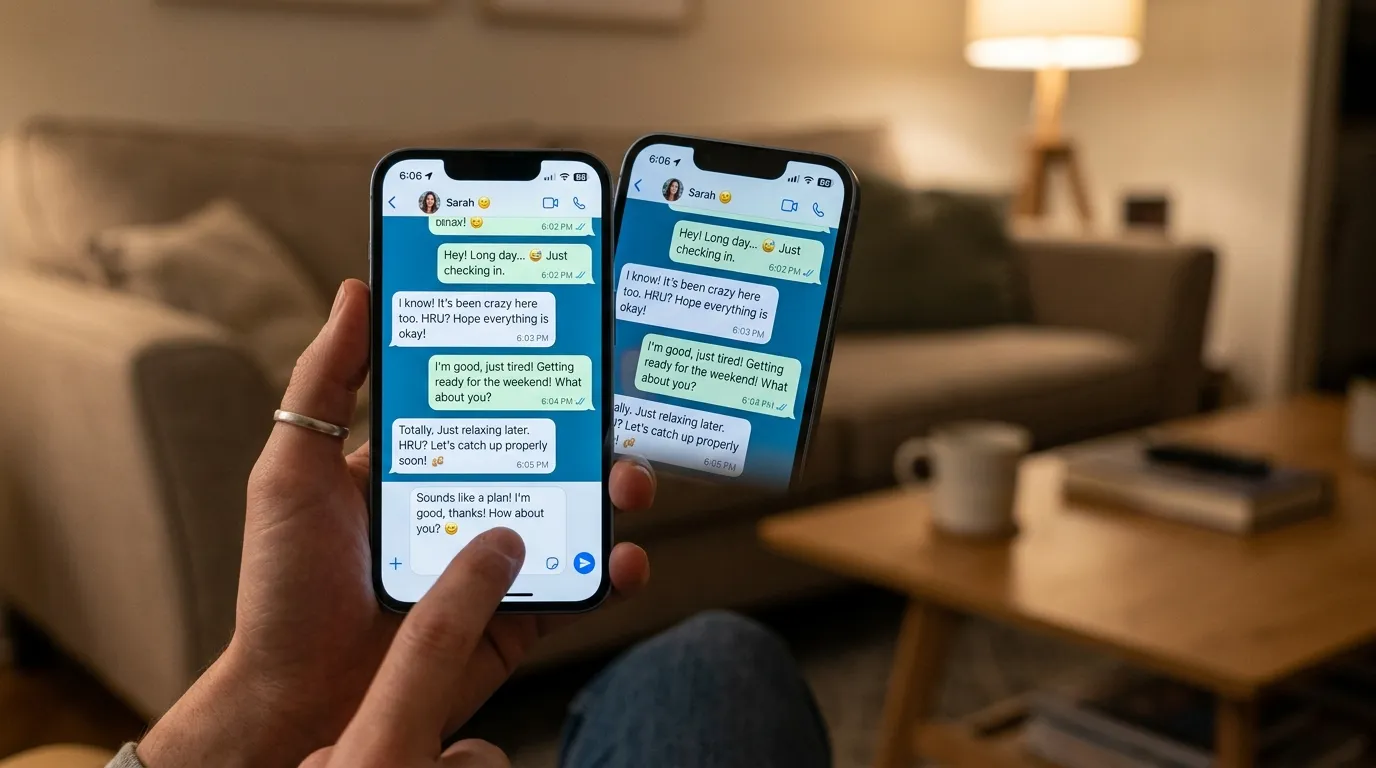
If you’ve come across the abbreviation HRU in a text message, social media comment, or direct message, you may be wondering what it means. Simply put, HRU stands for “How Are You?” and is commonly used as a quick and convenient way to ask someone how they are doing.
This popular texting abbreviation appears frequently on platforms such as TikTok, Snapchat, Instagram, WhatsApp, Facebook Messenger, and SMS conversations.
As online communication continues to evolve, internet users often shorten common phrases to save time and make conversations more casual. HRU is one of the most widely recognized abbreviations used in digital communication today.
Whether you’re chatting with friends, responding to a social media message, or trying to understand modern texting language, knowing the meaning of HRU can help you communicate more effectively. In this guide, you’ll learn what HRU means, where it’s used, how to respond to it, and why it remains popular across social media platforms.
HRU Meaning in Text
HRU stands for “How Are You?”
It is an abbreviation commonly used in texting and online messaging. Instead of typing the full question, people shorten it to HRU to save time and make conversations faster.
This abbreviation is not considered complicated internet slang. It is simply a shorter way to ask someone how they are feeling or how their day is going.
For example:
- HRU today?
- Hey, HRU?
- It’s been a while. HRU?
In everyday conversations, HRU serves the same purpose as asking:
- How are you?
- How’s it going?
- How have you been?
- What’s up?
The meaning usually depends on the context, but in most situations, it’s simply a friendly greeting.
Where People Use HRU
HRU appears across many social media platforms and messaging apps.
TikTok
On TikTok, users often send HRU in direct messages or comment sections when starting conversations. It is commonly used as a friendly opener before discussing videos or trends.
Snapchat
Snapchat users frequently send quick abbreviations because messages are fast and casual. HRU is commonly used to check in with friends or continue streak conversations.
On Instagram, HRU often appears in direct messages. Someone might reply to a story and begin the conversation with “HRU?”
WhatsApp users around the world use HRU in both personal and group chats. It helps keep conversations quick and informal.
SMS
Traditional text messaging is one of the oldest places where HRU became popular. People have used abbreviations like HRU for years to save typing time.
Real Chat Examples
Here are 10 realistic examples showing how HRU is used in everyday conversations.
Example 1
A: Hey!
B: Hi 😊
A: HRU?
Example 2
A: Long time no talk.
B: I know!
A: HRU these days?
Example 3
A: Morning!
B: Good morning.
A: HRU today?
Example 4
A: Just saw your post.
B: Thanks!
A: HRU by the way?
Example 5
A: Hey stranger 😄
B: Haha hey.
A: HRU?
Example 6
A: What’s new?
B: Not much.
A: Cool, HRU?
Example 7
A: Hi!
B: Hello.
A: HRU after the exam?
Example 8
A: Happy birthday!
B: Thank you!
A: HRU feeling today?
Example 9
A: Haven’t seen you online lately.
B: Been busy.
A: HRU now?
Example 10
A: Hey buddy.
B: What’s up?
A: HRU?
How to Reply When Someone Says “HRU”
There are many ways to respond depending on the tone of the conversation.
Funny Replies
- Alive and surviving 😄
- Running on coffee and hope.
- Better than my Wi-Fi.
- Still figuring out adulthood.
Casual Replies
- I’m good, thanks.
- Doing great today.
- Pretty good, you?
- Not bad at all.
Friendly Replies
- I’m doing well. How about you?
- Great to hear from you!
- Everything’s going well. How are you?
- Doing fine. Hope you’re good too.
Neutral Replies
- I’m okay.
- Doing alright.
- Fine, thanks.
- Not much, just relaxing.
Is HRU Rude or Offensive?
No, HRU is generally not considered rude or offensive.
It is a friendly and widely accepted abbreviation used in casual conversations. Most people understand it as a simple way of asking, “How are you?”
However, context matters.
In casual texting with friends, family members, or classmates, HRU is completely normal.
In professional settings, such as business emails or formal workplace communication, writing the full phrase “How are you?” may appear more professional and polite.
At school, among friends, and on social media, HRU is generally safe to use.
Who Uses This Term?
HRU is used by a wide range of people online.
Teenagers
Teenagers frequently use abbreviations because they prefer fast communication. HRU is common in texting and social media chats.
Gen Z Users
Gen Z users often mix HRU with other internet abbreviations and slang. It remains a popular conversation starter on social platforms.
Young Adults
College students and young professionals commonly use HRU in casual messages.
Social Media Users
Anyone who regularly uses messaging apps may encounter HRU.
Although newer slang terms appear every year, HRU remains one of the most recognizable texting abbreviations online.
Origin of the Term
The abbreviation HRU likely developed during the early days of text messaging and internet chat rooms.
When mobile phones had smaller keyboards and character limits, people started shortening common phrases to save time.
Expressions like:
- BRB (Be Right Back)
- IDK (I Don’t Know)
- LOL (Laugh Out Loud)
became popular for the same reason.
HRU followed a similar pattern by shortening “How Are You?” into just three letters.
There is no single person credited with creating the term. Instead, it gradually became part of internet culture through texting, instant messaging, and social networking platforms.
Today, it remains widely understood across many online communities.
Comparison Table
| Term | Meaning | Type | Usage | Popularity |
| HRU | How Are You? | Abbreviation | Greeting or check-in | High |
| IDK | I Don’t Know | Acronym | Expressing uncertainty | Very High |
| IDC | I Don’t Care | Acronym | Showing lack of concern | High |
| IMO | In My Opinion | Acronym | Sharing opinions | High |
| BRB | Be Right Back | Acronym | Temporary absence | High |
Real-World Usage Example
Imagine two friends who haven’t spoken for several weeks.
One friend noticed the other posted a new photo on Instagram. They decide to send a quick message saying:
“Hey! HRU?”
The message serves as a simple and friendly way to restart the conversation. Instead of immediately discussing a topic, the sender first checks in to see how the other person is doing.
This is one of the most common real-world uses of HRU.
FAQs:
What does HRU mean in text messages?
HRU means “How Are You?” It is a shortened way of asking someone how they are doing.
What does HRU mean on TikTok?
On TikTok, HRU usually means “How Are You?” and is commonly used in direct messages and comments.
Is HRU slang?
Not exactly. HRU is primarily a texting abbreviation rather than traditional slang.
Is HRU rude or offensive?
No. HRU is generally friendly, polite, and safe to use in casual conversations.
How should you reply to HRU?
You can respond with phrases like “I’m good, thanks,” “Doing well,” or “Pretty good, how about you?”
Conclusion:
HRU simply means “How Are You?” and is one of the most common abbreviations used in texting and online messaging.
People use it on TikTok, Snapchat, Instagram, WhatsApp, and SMS when starting conversations or checking in with friends. It is friendly, easy to understand, and widely accepted in casual communication.
While HRU works well in everyday chats, using the full phrase “How are you?” may be better in formal or professional situations. Understanding abbreviations like HRU can make online conversations easier and help you communicate more naturally across social media platforms.